B2B marketing does more than generate leads. It builds trust, creates personalized experiences, and proves measurable impact in a challenging market. For industrial and technical brands, strategic marketing means connecting with the hearts and minds of customers – leveraging technology and communications to promote a brand’s value, benefits, and maximize return.
For over 20 years, Stifel Marcin has been at the forefront – helping B2B organizations adapt and thrive. As we look ahead at 2026 B2B marketing trends, several forces are shaping how manufacturers and technical brands connect with customers, from AI in B2B marketing to privacy-first strategies and the growing influence of videos and events.
1. AI Moves Beyond Buzzword to Strategic Necessity
According to Demand Gen Report, 67% of B2B marketers already use AI for personalization, and that number is expected to exceed 80% by the end of 2026. When used properly, AI is a powerful asset in a B2B marketer’s toolbelt. At a basic level, it is a research assistant, thought starter, and efficiency driver.
But AI users can also provide robust, data-driven computation to help analyze information, segment audiences and campaign insights, and even provide recommendations. With AI, the value relies not in the tool itself, but as they say – using the right “tool” (or prompt!) for the job.
AI can be incredibly valuable but, especially in the complex world of B2B, it can also be incredibly wrong. Having a marketing team that understands how and why to use AI is critical. If you’re thinking AI can replace a marketing team – think again.
Our agency helps brands utilize AI to its fullest potential, a tool in our arsenal to implement robust AI content optimization services to deliver efficiency without sacrificing authenticity. We establish clear guardrails to keep your brand’s voice human-centered, ensuring that AI enhances your message rather than diluting it. The goal is to let AI handle repetitive work, freeing up your team to focus on high-level strategy and genuine connection.
Key takeaways:
- AI is shifting from experimentation to embedded strategy.
- Human oversight ensures authenticity in a data-driven world.
- Strategic implementation frees up marketers to focus on high-level growth initiatives.
2. How Privacy-First Strategies are Reshaping B2B Marketing
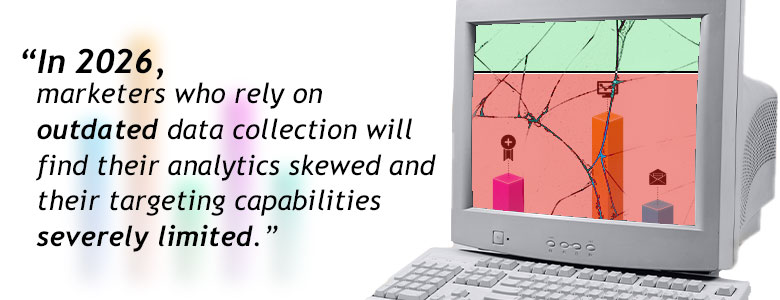
With the ongoing deprecation of third-party cookies and new privacy regulations, the way B2B brands collect and use data is undergoing a fundamental shift. In 2026, marketers who still rely on outdated data collection will find their analytics skewed and their targeting capabilities severely limited. The focus is now on permission-based marketing and a first-party data strategy.
This means focusing on what you own: your email lists, gated content downloads, event registrations, and direct CRM integrations. By building a robust library of first-party data, you not only provide compliance but also gain richer, more reliable insights into your ideal customer. Tools like Microsoft Clarity’s new consent mode and Google Consent Mode are becoming non-negotiable for accurate analytics, requiring a proactive – not reactive – approach.
We guide our clients through this transition by building privacy-complaint lead capture systems. We develop valuable content and experiences that encourage users to share their information, creating a more powerful and trustworthy foundation for your marketing efforts. We also ensure that our clients’ data collection workflows and digital settings are up-to-date and compliant with the latest global and regional requirements as specific to their needs and standards.
Key takeaways:
- First-party data creates more reliable insights and compliance.
- Consent modes are changing how data is collected and analyzed.
- Proactive privacy strategies can strengthen trust and performance.
Reach out to our digital marketing experts with questions related to privacy regulations. We are ready to help.
3. What Total Account Experience Means for Manufacturers
With buyers spending roughly seven hours a day on screens, standing out from the vast amount of digital noise is more challenging than ever. In 2026, successful campaigns will be aligned to the buyer journey.
Account-based marketing (ABM) is no longer a niche tactic but a core strategic discipline. The evolution from ABM to Total Account Experience (ABX) reflects a shift from simply targeting accounts to orchestrating a seamless, integrated experience across touchpoints. From tailored messaging and value propositions to calls-to-action and content types, campaigns with curated content and audience segmentation can help drive engagement and return.
This means fully aligning sales and marketing efforts. This could mean a targeted ad campaign on LinkedIn that is followed by a relevant email sent through a CRM, and then personalized outreach from a sales representative. Every interaction, from a virtual event to a website visit, is designed to feel like a cohesive, valuable conversation. This coordinated effort not only shortens sales cycles but also boosts conversion rates by focusing resources on the audiences most aligned with a holistic marketing strategy and goals.
Key takeaways:
- ABX focuses on orchestrating personalized buyer experiences.
- Sales and marketing alignment drives conversion efficiency.
- Coordinated digital journeys build stronger customer relationships.
4. Why Video Content Matters for B2B in 2026
The value of video has risen year-over-year in holistic marketing strategies, and in 2026 it should be included as part of a thoughtfully developed B2B plan. According to Hubspot, “over 80% of B2B buyers rely on video during vendor evaluations, up from 67% in 2024.”
Buyers are watching video to research products, learn about new technologies, and validate vendor credibility. The most successful content isn’t just informative; it’s engaging and easily digestible. Video marketing can be more than product demos and facility tours. Valuable video content can include:
- Thought Leadership: Short, authoritative videos from your subject matter experts.
- Case Studies: Customer testimonials and success stories that build trust.
- Explainer Videos: Breaking down complex services, industry challenges, and solutions into digestible formats.
Our approach helps clients leverage video across their marketing funnel, from brand awareness on social media to converting leads with digital resources that your sales team can share. Stifel Marcin’s full service capabilities mean we can leverage video across an overarching marketing plan, maximizing the value of video content across multiple channels to increase ROI. We don’t just create video; we create a strategic video plan that reinforces your expertise, aligns with your brand, and delivers growth.
Key takeaways:
- Video drives engagement and trust, especially in long buyer cycles.
- Short, focused content performs best across digital channels.
- Strategic video planning maximizes ROI and reach.
Learn how you can leverage video marketing to engage customers with impact.
5. How Events are Evolving in a Post-Pandemic B2B World
After a pandemic-induced hiatus, in-person events are back in full force, but their role has changed. The value of a trade show or conference is no longer defined by the booth alone. The ROI is determined by how well it integrates with your marketing ecosystem.
The most successful event strategies will be hybrid and omnichannel. This includes:
- Pre-event lead nurturing via targeted email campaigns.
- Purposeful in-booth activities, designed to drive booth visitors and generate new conversations.
- Live-streamed content and virtual workshops to reach a global audience.
- Careful data collection with detail-driven segmentation, allowing for tailored marketing follow-up and customer specific outreach.
- Post-event follow-up that delivers custom content based on booth conversations.
Events are a powerful content and relationship-building engine. They provide the ideal opportunity to interact one-on-one with customers and prospects, displaying products and capabilities to audiences.
And while customers can use in-person experiences to learn about your brand, events also offer opportunities for you to learn about your audience. What are trending concerns that impact their mindset? How can you gather insights that allow you to tailor your marketing content better to drive action? All of these insights can help curate content, focus placements, and drive relationships long after the floor show closes.
Key takeaways:
- Events are powerful content and engagement opportunities.
- Hybrid strategies maximize reach and ROI.
- Post-event follow-up is critical to conversion.
Explore our trade show marketing services to learn how we help brands turn in-person events into long-term digital assets.
6. From Ranking to Answering: Optimizing for AI Search
As AI-driven search and voice queries become more prevalent, the goal of search engine optimization (SEO) is evolving. It’s no longer just about ranking #1 on a Google search results page. In 2026, success depends on whether your content can provide a concise, authoritative answer that AI can confidently present to a user. This is the essence of Answer Engine Optimization (AEO).
AEO is not a replacement for traditional SEO, but a crucial complement. It involves structuring your content with clear, direct answers, using well-defined headings, and including FAQ sections. This approach makes your content highly “readable” for AI models, increasing the likelihood that your brand is cited in no-click results, chatbots, voice-based search, and overviews.
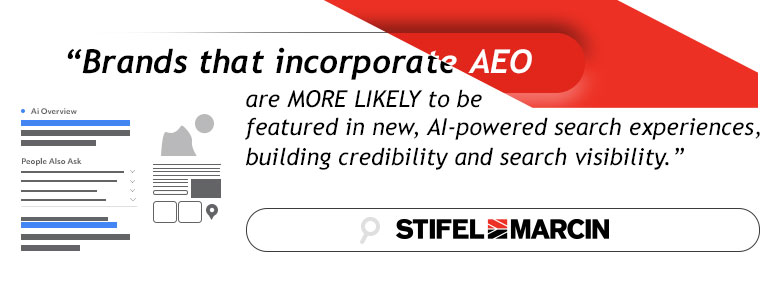
Brands that incorporate AEO are more likely to be featured in these new, AI-powered search experiences, building credibility and search visibility in an increasingly conversational search landscape.
Key takeaways:
- AEO complements traditional SEO strategies.
- Clear, structured answers improve visibility in AI search.
- Early adoption builds long-term authority.
Read our article,” Understanding B2B SEO Search Engine Results and the Rise of SERP Features” for more details about building a strong search engine results strategy.
The Path Forward for B2B Marketers in 2026
The industrial B2B marketing trends of 2026 reflect a common thread: the need for integrated, trust-driven strategies. From AI adoption and privacy-first data collection to video marketing and ABX experiences, the strongest brands will be those that connect customer touchpoints into a cohesive strategy.
To succeed, marketers must combine data, creativity, and expertise. Whether you’re building a demand generation engine or optimizing content for AI search, a strategic partner can help accelerate results.
As a full-service B2B marketing agency, we specialize in helping brands like yours integrate strategy, content, and campaigns to deliver tangible, real-world results. Contact us today to discuss your marketing needs and let’s start a conversation.
Stifel-Marcin – The B2B Marketing Agency
Unlike many advertising and marketing agencies, B2B isn’t just something that we do, it’s all we do. We’ll work to help your brand achieve its goals through the strategic combination of creativity, communication and technology. Our focused client intake processes give us the ability to thoroughly understand your business, products and objectives, working to identify the competitive advantages and opportunities that will grow awareness, leads and sales. We develop innovative marketing plans with strategic, data-driven processes, presenting complex ideas and compelling messages that position your business ahead of the competition.
As your cooperative partner, our integrated B2B marketing agency is dedicated to your success. If you have questions about marketing strategy or planning for 2026, contact us today